The Emerald City’s Symbolism

Wizard of Oz Fact #106: The Emerald City's Symbolism

The Emerald City's Symbolism

The Emerald City, with its radiant green towers and utopian design, represents an idealized American cityscape. In L. Frank Baum’s vision, it symbolizes progress, technology, and civilization: a stark contrast to the rural Kansas of Dorothy’s origin. Modern adaptations, including The Emerald Signal of Oz, continue to explore the city’s mystique and hidden layers.

Loved this fact? Discover more Wizard of Oz lore in my new book – The Emerald Signal of Oz, available on Amazon!

Source: The Wonderful Wizard of Oz

L. Frank Baum’s Revolutionary Approach

Wizard of Oz Fact #105: L. Frank Baum's Revolutionary Approach

L. Frank Baum's Revolutionary Approach

L. Frank Baum created Oz as a deliberate departure from European fairy tales. He wanted an American fairy tale with American characters and values. Published in 1900, The Wonderful Wizard of Oz became one of the first bestselling children’s books in the United States.

Loved this fact? Discover more Wizard of Oz lore in my new book – The Emerald Signal of Oz, available on Amazon!

Source: L. Frank Baum Official Biography

Oz as Allegory for Silver Standard

Wizard of Oz Fact #104: Oz as Allegory for Silver Standard

Oz as Allegory for Silver Standard

Many scholars interpret L. Frank Baum’s Oz books as political allegory. The Yellow Brick Road represents the gold standard, while Dorothy’s silver shoes symbolize the monetary debate of the 1890s. The Scarecrow represents farmers, the Tin Man represents industrial workers, and the Cowardly Lion represents political figures.

Loved this fact? Discover more Wizard of Oz lore in my new book – The Emerald Signal of Oz, available on Amazon!

Source: The Wizard of Oz: Monetary Allegory

The Wicked Witch’s Green Makeup

Wizard of Oz Fact #103: The Wicked Witch's Green Makeup

The Wicked Witch's Green Makeup

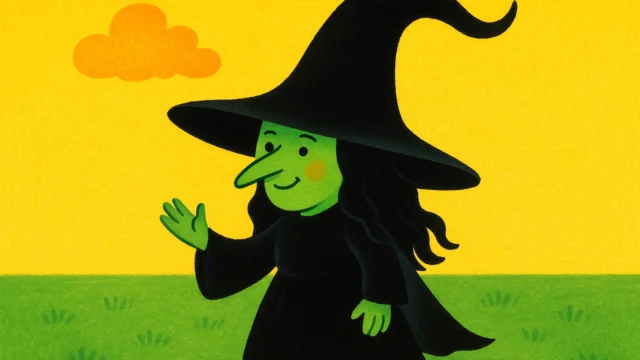
Margaret Hamilton, who played the Wicked Witch of the West, had to wear toxic copper-based green makeup for the role. The makeup was so harsh it caused skin irritation, and she suffered minor burns during a fire scene. Despite the discomfort, her performance became iconic.

Loved this fact? Discover more Wizard of Oz lore in my new book – The Emerald Signal of Oz, available on Amazon!

Source: Margaret Hamilton Biography

Dorothy’s Ruby Slippers

Wizard of Oz Fact #101: Dorothy's Ruby Slippers

Dorothy's Ruby Slippers

In L. Frank Baum’s original 1900 novel, Dorothy’s magical shoes were silver, not ruby. MGM changed them to ruby red to showcase Technicolor’s capabilities in the 1939 film. The iconic ruby slippers have become the most recognizable shoes in cinema history.

Loved this fact? Discover more Wizard of Oz lore in my new book – The Emerald Signal of Oz, available on Amazon!

Source: The Wizard of Oz (1939 film)

Wicked’s Emerald City Was Inspired by Art Deco

Wizard of Oz Fact #100: Wicked’s Emerald City Was Inspired by Art Deco

Wicked’s Emerald City Was Inspired by Art Deco

The stage design for ‘Wicked’ incorporates Art Deco influences to give the Emerald City a sleek, industrial elegance. This aesthetic choice contrasts sharply with the organic, natural motifs of Munchkinland, reinforcing the show’s themes of power and spectacle.

Loved this fact? Discover more Wizard of Oz lore in my new book – The Emerald Signal of Oz, available on Amazon!

Source: Wicked (2003)

The Tin Man’s Costume Restricted Jack Haley’s Movement

Wizard of Oz Fact #99: The Tin Man’s Costume Restricted Jack Haley’s Movement

The Tin Man’s Costume Restricted Jack Haley’s Movement

Jack Haley’s Tin Man costume was made from metal‑like materials that severely limited his range of motion. The stiff suit made it difficult for him to sit, bend, or even raise his arms fully. Despite these challenges, Haley delivered a warm and expressive performance that helped define the Tin Man as one of the film’s most beloved characters.

Loved this fact? Discover more Wizard of Oz lore in my new book – The Emerald Signal of Oz, available on Amazon!

Source: Parade